
A new year brings fresh momentum—and for many local businesses, it also brings a familiar headache: cramped back rooms, overflowing inventory corners, and “temporary” stacks that never go away. Clutter doesn’t just look messy. It slows your team down, makes inventory management harder, increases the chance of damaged products, and can create safety risks when walkways and exits aren’t clear.
If you’re looking for a practical reset that sticks, start with two goals: reclaim your most valuable space and build a simple storage system for what stays on-site versus what gets stored. For companies across the state, business storage options—especially portable storage containers—can be a straightforward way to get organized without paying for a bigger building or remodeling your current space.
This guide walks through realistic ways to declutter, set up smarter storage, and keep your business operating with less stress, more speed, and better control all year long.
Why decluttering matters (beyond “looking organized”)
Decluttering isn’t about making your stockroom “pretty.” It’s about building a more efficient business.
When clutter builds up, your team wastes time searching for items, working around obstacles, and constantly re-stacking or re-moving boxes just to do basic tasks. That lost time adds up. Clutter also makes it easy to lose track of what you already have, leading to duplicate orders, missed stock, expired inventory, or promotional materials you paid for but never used.
There’s also a safety element. Tight walkways, unstable stacks, blocked exits, and cluttered loading zones can turn into injuries and costly interruptions. A decluttered workspace is easier to maintain, easier to train on, and easier to operate during busy seasons.
Start with a fast “three-zone sort”
The quickest way to get momentum is to stop overthinking and start sorting. Use a three-zone method that works for real businesses.
Zone 1: Daily-use essentials (keep on-site)
These are the supplies, products, and tools you use every day or every week. Keep them accessible and organized because they directly affect operations.
Examples:
Top-selling product back stock
Daily shipping supplies
Frequently used tools and equipment
Current marketing materials and signage
Zone 2: Seasonal/occasional items (store nearby)
These are items you need, but not constantly. They’re the biggest clutter creators because they “might be needed soon,” so they end up living in your prime space.
Examples:
Seasonal inventory (holiday, summer, winter)
Event displays, booths, signage, and branded materials
Extra shelving, fixtures, or furniture
Bulk supplies you don’t need weekly
Zone 3: Hold-and-review (store with a decision date)
These are items you can’t decide on immediately. Instead of letting them live in your workspace forever, move them out of the way and set a review date.
Examples:
Overstock you plan to discount later
Items waiting for repair
Archived documents (within retention needs)
Old promo items that “might still be useful”
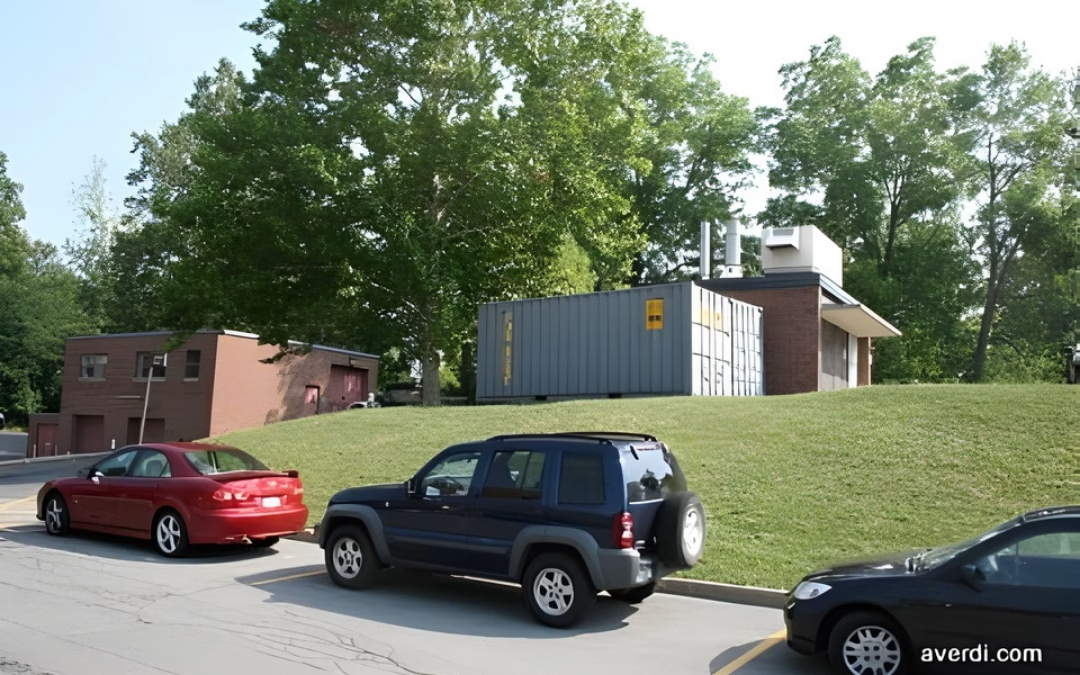
This is where commercial container rental becomes a practical tool. It gives you a secure, convenient “extra room” for Zones 2 and 3—without adding permanent square footage.
Reclaim your revenue-generating space first
If you’re short on time, focus on decluttering the spaces that impact sales, speed, and customer experience.
Start with:
Customer-facing areas (retail floor, lobby, showroom)
Packing stations and fulfillment areas
Receiving zones and loading areas
Backroom aisles and emergency exits
These areas are where your business makes money and keeps work moving. When they’re blocked, everything feels harder. A storage container helps because you can move overflow out immediately, then organize without pressure.
What to store vs. what to keep on-site
A simple rule: if you don’t need it weekly, it shouldn’t take up your best space.
Great candidates for business storage NY using temporary containers:
Seasonal inventory and décor
Event supplies (tents, signage, tables, booths)
Extra fixtures (racks, shelving, display pieces)
Marketing materials (banners, promo items, bulk print)
Overflow shipping supplies (boxes, mailers, packing material)
Tools and equipment you don’t need daily
Back stock you want to keep but don’t want cluttering operations
Items that usually belong inside your day-to-day workspace:
Best-sellers you restock constantly
Daily shipping materials
Frequently used tools
Active job files and current operational paperwork
The goal is to keep daily operations simple with a clear grab-and-go flow, while overflow stays protected and accessible.
Use a “seasonal swap” routine so clutter doesn’t come back
Most businesses declutter once and then watch clutter return. To prevent that, create a seasonal swap routine.
Here’s the pattern:
When a season ends, move that inventory and décor into storage.
Pull the next season’s items from storage and stage them neatly.
Review what sold, what didn’t, what to reorder, and what to discount.
With commercial container rental, a seasonal swap is easier because you’re not spreading seasonal items across closets, corners, and random stacks. You’re rotating intentionally.
Set up labeling your team will actually follow
Organization fails when it depends on one person’s memory. Make it obvious where things go—and easy for anyone to maintain.
Use labels like:
Season + Category (example: Spring Promo – Signage)
Department (example: Shipping Supplies)
Action (example: Liquidation, Donate, Return, Repair)
If you’re using a container, set up zones:
Front zone: items you’ll need soon
Middle zone: seasonal/occasional access
Back zone: archive/rarely touched items
A simple habit that saves hours: keep a running Container Inventory List (even in Notes). Add items as they go in and out. It prevents “mystery box” chaos later.
Make decluttering manageable with a short timeline
Decluttering dies when it feels endless. Give it a timeline so you can finish strong.
Try this schedule:
Day 1: Identify zones and move obvious overflow into storage
Day 2: Organize daily-use areas and label shelves
Day 3: Sort hold-and-review items and set review dates
Weekly (15 minutes): quick reset of problem areas
Monthly (30 minutes): review stored “uncertain” items and decide
A container plus a timeline turns “we should organize someday” into “we have a system.”
Practical examples (so you can picture it)
Retail: Store seasonal displays, extra racks, and bulk overstock so the backroom stays walkable and restocking stays fast.
Restaurant/catering: Store event gear, extra seating, tents, and seasonal patio items so prep areas stay functional.
Contractors/trades: Store tools, materials, and equipment in a secure container to reduce clutter and keep the shop organized.
E-commerce: Store packaging overflow, returns waiting inspection, and seasonal inventory so the packing line stays efficient.
No matter the business, the goal is the same: clear the space where the work happens, store overflow safely, and rotate inventory intentionally.
Common mistakes to avoid
Decluttering without a designated home for overflow
Letting “maybe” inventory occupy prime space indefinitely
Skipping labels (unlabeled bins become mystery boxes)
Over-stacking and blocking access inside storage
Forgetting a seasonal rotation routine
The bottom line
Decluttering is easiest when you treat it like a space strategy, not a willpower challenge. If your business is growing, your inventory and equipment will grow too. The question is whether they’ll grow in a way that supports your workflow—or buries it.
Commercial container rental gives you room to breathe, room to organize, and room to operate like the business you’re building. It’s one of the fastest ways to reduce stress, improve efficiency, and maintain a professional, dependable workspace all year long.
Start by identifying what your team truly needs daily, what can rotate seasonally, and what deserves a decision date. Then choose a storage approach that keeps your business moving forward—clean, organized, and ready for what’s next.